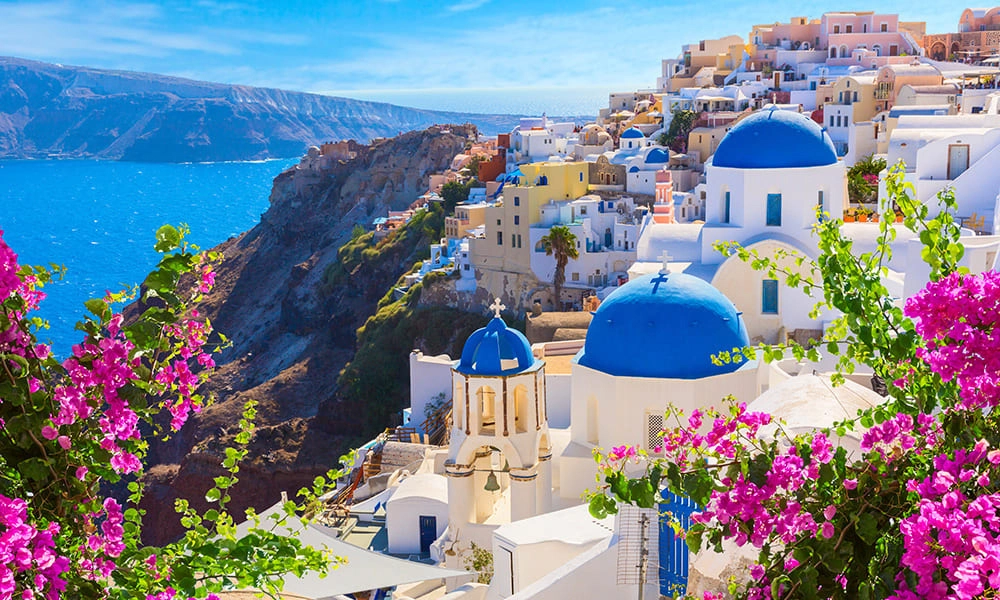
The Greek real estate market in 2026 is defined by clear fundamentals: property prices are growing at ~6–7% annually, rental yields average 4–6%, and demand continues to exceed supply. Residential values have already risen 86% since 2017 and are now above pre-2008 levels, while entry prices — even in the premium segment (~€7,000–€12,000 per sq. m) — remain below major European capitals. For investors, this creates a straightforward proposition: income + capital growth within an EU market that has not yet reached full pricing maturity.
This article contains everything you need to know about the Greek real estate market, as we analyse the key factors that influence it and look at whether it is worth buying real estate in Greece in 2026.
Greek Real Estate Market Overview: Key Takeaways
- ~6–7% annual price growth with values already above pre-crisis levels
- ~4–6% rental yields supported by real, year-round demand
- ~86% price increase since 2017, confirming long-term recovery momentum
- Prime property priced at ~€7,000–€12,000 per sq. m, below global benchmarks
- Construction output: ~6.5M sq. m annually, still insufficient to meet demand
- Foreign investment remains strong, with ~€938M in real estate FDI (H1 2025)
- Tourism at ~38M visitors annually, supporting rental demand
- Golden Visa entry from €250,000 (specific projects) and €400,000–€800,000 depending on location
- Cost of living: ~€800/month per person, lower than Western Europe
Real Estate Market Review
The Greek property sector has been demonstrating stable growth thanks to a booming economy, inflow of foreign investment, and high tourist numbers.
Economy and Expert Forecasts
Greece has emerged as one of the best-performing economies in recent years, ranking among global leaders in growth according to The Economist. Its return to investment-grade status has been reinforced by upgrades from major agencies, including Fitch Ratings raising Greece to “BBB” in November 2025, highlighting strong fiscal performance, declining debt, and resilient economic growth.
Inflow of Foreign Investment
According to the Bank of Greece, in the first half of 2025, real estate investments reached €938 million, accounting for around one-third of total foreign direct investment (€2.8 billion).
The share has declined compared to the previous year, when over half of FDI was directed into real estate, reflecting a shift in investor priorities. In 2025, foreign buyers were increasingly focused on stable, long-term returns, particularly in resort and premium properties, rather than short-term high yields.
Rise in Prices and Rental Rates
According to the Bank of Greece, residential property prices nationwide are now 7.14% higher than their pre-2008 crisis peak, having increased by 86% since the market low in 2017. This trend is supported by strong demand from both domestic and international buyers.
In Attica, prices have exceeded 2008 levels by 12.5%, in Thessaloniki by 5.7%, while in some areas of Athens, growth has reached 20–30%. New-build properties in Attica are on average twice as expensive as the national average.
New Rules for Short-Term Rentals in Europe
From 1 July 2028, the EU will introduce VAT on short-term rentals (up to 30 nights), regardless of additional services. The goal is to unify taxes and equalise competition with hotels. The applicable VAT rate will depend on the country (typically aligned with local hospitality rates), while platforms such as Airbnb and Booking may be responsible for collecting and remitting the tax in many cases. Property owners may also face additional administrative requirements, including VAT registration and reporting obligations.
Real estate acquired within the framework of the Golden Visa program is not eligible for short-term rental use.
Growth of Construction Activity
Greece continues to demonstrate solid construction activity, with approximately 29,900 building permits issued and around 6.5 million sq. m of space developed over the period of December 2024-2025.
Activity remains concentrated in key regions, with Athens leading the market, followed by Central Macedonia and Crete, reflecting sustained demand for new developments in both urban and resort areas.
Tourism Growth
Greece continues to strengthen its position as one of the world’s leading tourist destinations. In 2025, the country welcomed nearly 38 million international visitors, setting a new all-time record and confirming sustained global demand.
This growing appeal is also reflected in international rankings. According to the 2025 Readers’ Choice Awards by Condé Nast Traveler, Greece was ranked the 2nd best holiday destination in the world, surpassed only by Japan. The ranking is based on over 757,000 reader votes, placing Greece ahead of major European destinations such as Portugal, Italy, Spain, and Turkey.
The growth is driven by strong demand from key European markets, including the UK, Germany, and Italy, alongside increasing interest from long-haul travellers, particularly from the USA, Israel, and the Middle East. At the same time, airlines continue to expand flight capacity, supporting both peak-season and year-round tourism.
Where is the Best Place to Buy Real Estate in Greece?
Athens remains the most strategic location for real estate investment in Greece, offering a unique combination of stable demand, price growth, and long-term development potential. As the country’s economic and cultural centre, the city provides a balanced mix of rental income and capital appreciation, making it the preferred choice for both local and international investors.
This strong positioning is supported by several key factors:
- Year-round rental demand from locals, expats, and tourists
- Limited housing supply supporting price and rent growth
- Average rental yields of around 4–5%
- Consistent property price growth (approx. 6–7% annually)
- Most liquid real estate market in Greece (easy to rent and resell)
- Ongoing large-scale developments (e.g. Athens Riviera / Ellinikon)
- Strong international demand driven by Golden Visa and lifestyle appeal
- Lower entry prices compared to other major European capitals
As one of Greece’s leading real estate agencies, Astons has a wide portfolio of Golden Visa-eligible properties in Athens and will be glad to assist you throughout the entire process — from selecting the right property to securing your residence permit.
Popular Areas for Investment in the Capital
Central Athens. This area is in high demand among foreign buyers who are interested in profitable real estate and obtaining a residence permit in Greece. Here, old commercial buildings are actively being converted into modern residential complexes that meet the requirements of the Golden Visa programme. Athens is the capital of Greece, and is located on the shores of the Aegean Sea, with a population of more than 3 million people. It is a cultural, economic and tourist centre, with a developed infrastructure and a dynamic life that can be enjoyed by locals and tourists of all ages.
Piraeus. Piraeus is a suburb of Athens with the largest port in the Mediterranean, where cruises depart to neighbouring islands and other European countries. The city has excellent infrastructure, and the centre of the capital can be reached in just 15-20 minutes by car or metro. Piraeus attracts investors and business professionals, as it offers an excellent location with a strong trading environment.
Glyfada, Voula, Vari, Vouliagmeni. These are all fashionable suburbs located on the Athenian Riviera, where you will find luxury hotels, pristine beaches and the best golf courses in Greece. These are the pearls of the southern coast, and attract tourists with their picturesque nature and calm and measured life. Vouliagmeni is the most expensive location in Attica, where the average rental rate reaches €20/m². For comparison, at the end of 2024, the average rental cost in the centre of Athens was €13-14/m², and in the prestigious Kolonaki this reached €16-17/m².
Kifisia, Chalandri. The northern suburbs of Athens are also fashionable areas, located within close proximity to the capital. The climate is cooler here and there is more greenery, like parks and gardens. Both areas are popular with wealthy expats for their good ecology, comfort, excellent infrastructure and a more relaxed pace of life than in Athens.
Why Greece is a Promising Destination for Real Estate Investment
- More accessible luxury real estate
Prime property in Greece typically ranges from €7,000 to €12,000 per sq. m, significantly below major global cities such as London and Paris, allowing entry into the premium segment at a lower cost.
- Competitive cost of living
Around €800 per month per person (excluding rent) and €2,700–€3,000 for a family of four, making long-term ownership and relocation more affordable than in most Western European countries.
- Stable rental yields
Average gross yields of ~4–5%, with higher potential in central locations and renovation projects.
- Consistent price growth
Property values continue to increase by approximately 6–7% annually, with further upside as the market continues to mature.
- Strong and diversified rental demand
Demand is supported by locals, expats, and international tenants, ensuring flexibility between short- and long-term rental strategies.
- The most cost-efficient Golden Visa program in the EU
Real estate investment in Greece provides a 5-year renewable residence permit, with entry thresholds starting from €250,000 for specific property categories, and €400,000–€800,000 depending on location. For comparison, most EU residency by investment programmes require a minimum investment of €300,000–€500,000 or more.
How to Invest in Greek Real Estate: Golden Visa is the Optimal Solution
The Greek Residence Permit by Investment program is one of the most popular ways to obtain a residence permit in Europe. In addition to the opportunity to legally live in Greece, investors also get the opportunity to travel to the Schengen countries without the need for a visa, open accounts in Greek banks, and have access to quality education and healthcare. In addition, it is a reliable backup plan in case of emergencies and an opportunity to protect your assets and interests.
To participate in the program, an investor must be over 18 years old, have no criminal record, must not be a citizen of Greece or the European Union, and have health insurance.
A residence permit is issued for 5 years to the main applicant, and it is possible to obtain resident status for members of his/her family as well, including spouse, children and parents of both spouses. After 5 years, the status can be extended if the investor retains their investment.
From 1 September 2024, different minimum investment thresholds were introduced, depending on the region of Greece:
- €800,000 – Athens, Attica, Thessaloniki, Crete, Santorini, Mykonos and all cities/islands with a population over 3,100 people
- €400,000 – all other regions of Greece
In both cases, only real estate from the developer with an area of 120 sq. m or more is permitted to be purchased. Renting out such real estate for short-term is prohibited.
Investors can use an alternative option and still obtain a residence permit for property purchase from €250,000. The location and area of the property are not important, however the following property conditions must be met:
- Have historical or cultural significance and require restoration
- Are developed from commercial to residential use
Conversion of commercial real estate into residential means changing the status of the property. This means that a building previously used for commercial purposes – for example, as a retail store, office, warehouse or factory – is transferred to the category of residential property. After completing all the necessary legal procedures, this type of building can be used for human habitation, for example, as an apartment or an apartment complex. The developer buys the old building, completely renovates it, and turns it into a modern building that meets all safety and energy efficiency standards.
The investor does not carry out repairs or reconstruction on his own – all work, from design to finishing, is carried out by the developer. In fact, the investor invests in a promising project at the stage of its implementation, and after the completion of the reconstruction, the investor becomes the full owner of a modern apartment in a completely renovated building.
This option is especially in demand in Athens and its suburbs, as there are many suitable buildings in the capital region, like former industrial sites, old office buildings or retail premises. This means that there is a wide range of properties on the market that allow you to receive a Greek Golden Visa for the minimum required amount in a sought-after area.
Astons is a reliable partner in matters of investment immigration and foreign real estate. Contact our experts for a free consultation today, and our specialists will review your case and offer optimal solutions for your needs and budget.
FAQ
What is the average cost of real estate in Greece?
In prestigious suburbs such as Glyfada, Vouliagmeni, and in historical central areas, the price can reach €7,000-12,000 per 1 m² and even more.
Which areas of Greece are most attractive for investors?
What features should be taken into account when buying real estate in Greece?
What taxes and fees apply when purchasing real estate in Greece?
What support programs for foreign investors exist in Greece?
What are the prospects for property price growth in Greece?

Astons Community on social media


We’ll review your case and find the optimal path
In a 30-minute Consultation, We Will:
- Define a step-by-step process tailored to you
- Discuss the investment process and documentation
- Explain the risks and potential challenges in detail
- Initiate an internal assessment of your case’s success